
I Believe This About Acting
 By Anne Fielding, from Aesthetic Realism: We Have Been There, Six Artists on the Siegel Theory of Opposites (Definition Press, NY, 1969)
Anne Fielding taught acting based on Aesthetic Realism at HB Studio and the Aesthetic Realism Foundation in New York City. She says, “In this essay is just some of what I learned about the urgent, needed comprehension of the art of acting and the human self.” Read more
Hamlet Once More, Different
Report by Anne Fielding of a Poetry Class given by Eli Siegel
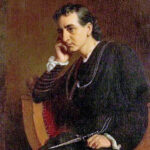
On a Sunday afternoon in September, 1963, at a Time Enough Poetry Class, I heard Eli Siegel read the first act of Hamlet. It was an important experience in theatre. Without smoke and dim lights, supernatural sounds or eerie music, there was the platform at Elsinore….There was the mystery and wonder with the feeling of cold night; there was the poetry and the life of it. Read more
Classic Mistakes in Acting—& Marriage
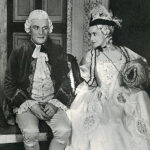 By Anne Fielding
The biggest mistake, Aesthetic Realism taught me, is for a woman to give way to her desire to be scornful and superior, to have contempt—for her husband and the world. This takes many everyday forms, all debilitating, all ruinous. And it’s amazing that every one of these forms has its likeness to mistakes in acting. Read more
There Was Stage, 18th Century, Poetry
 Report by Carol McCluer of an Aesthetic Realism lecture by Eli Siegel
This is thrilling, hopeful, inspiring education about something Aesthetic Realism explains for the first time: that the art of acting is an expression of the deepest desire of every person—to like the world. Read more
On Shakespeare’s Ophelia
 By Carol McCluer
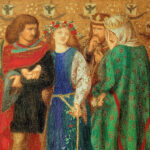
Eli Siegel is the critic who understood Ophelia truly, and he showed, looking at the text with scrupulous and loving exactitude, that the Danish girl is not a passive victim. Read more
On Edmund Kean’s Acting: American Poetry Says Something about Poetry
 Report by Carol McCluer of an Aesthetic Realism lecture by Eli Siegel
Eli Siegel discussed an essay, largely forgotten today, by the American novelist and essayist, Richard Henry Dana, about the great 18th century English actor Edmund Kean. He called it “perhaps the most important single theatrical criticism in the 1820s in America,” and “the most valuable description of acting perhaps in the world.” Read more
Edmund Kean—How Can a Man Have Real Self-Expression?
 By Bennett Cooperman
When a person expresses himself truly, I learned, he puts together inside and outside—what is deep within him comes out and joins with what Mr. Siegel calls a “‘friendly outside.” Read more
Mary Garden; or, Can a Woman Love, and Still Be Free?
 By Carrie Wilson
Eli Siegel recommended the autobiography of the important opera singer, Mary Garden’s Story, because her life brings up “the matter of what to leave out and what to include. Mary Garden said she didn’t want to marry. She felt that something interesting her might take her away from something else.” This is a question had by many women, and Aesthetic Realism answers it magnificently. Read more
Rachel—and True Individuality
By Carrie Wilson
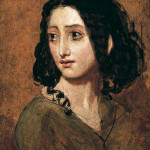
Everyone is hoping for true individuality, and the question is, what is it?…Tonight I’ll speak of what I’m immeasurably grateful to have learned and to teach other women on this subject, and about what we can learn from the life and art of the great 19th century French actress Rachel. Read more
Passion and Control in Shakespeare’s Twelfth Night
 By Ann Richards and Carol McCluer
“What should I be passionate about, if anything?” “Am I too cold, do I have enough feeling?” and “Why do I feel I’m all over the place, and don’t have control of my emotions?” are questions that torment women and men all over the world. Read more
William Macready—& What Men Can Learn about True and False Importance
 By Derek Mali
William Macready wanted to get deeply within the self, the life of the character he was portraying, and it made him one of the great Shakespearean actors. But Macready, myself, and most people, also have gone after fake importance at the expense of our own happiness. Read more